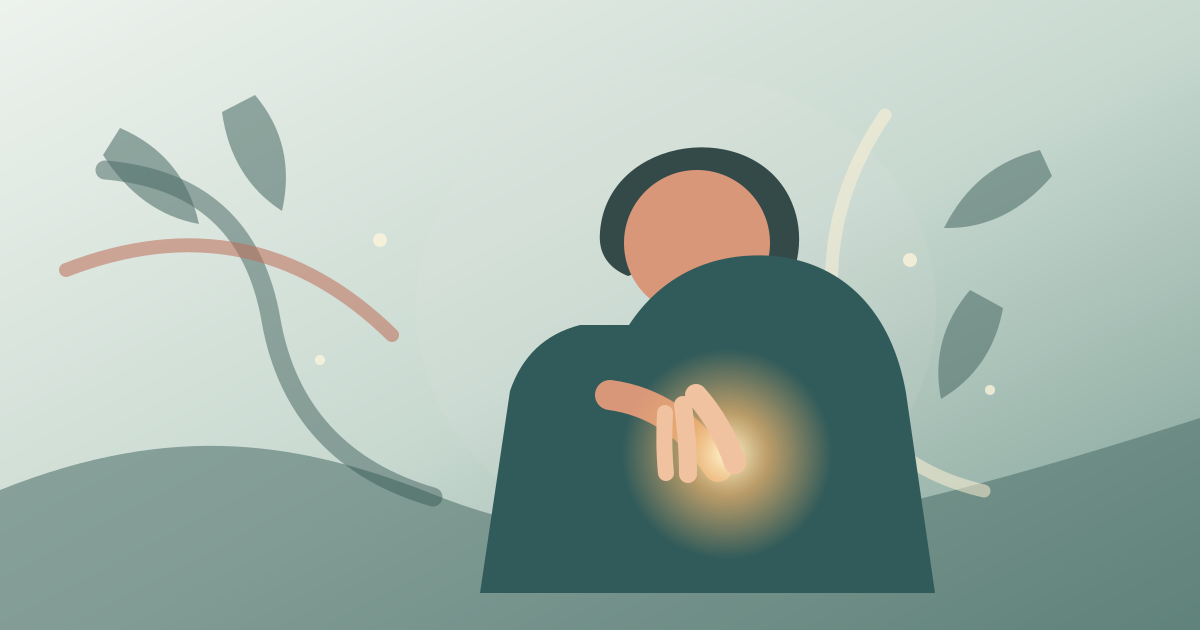
Stress reactions do not always look like panic or crying. Sometimes there is emptiness: no joy, sadness, or desire to speak. The body feels heavy or distant, thoughts slow down, and events seem to happen behind glass. This may be emotional numbing, a freeze response, depression, dissociation, exhaustion, or another condition that needs assessment.
Numbing does not mean an absence of humanity
Emotional numbing may appear after trauma, prolonged stress, grief, burnout, depression, medication changes, or substance use. The system may reduce the volume of experience when it feels overwhelmed or unable to act. This is not proof that you are cold or uncaring.
Freeze can also include difficulty moving, speaking, and deciding. During threat it is automatic. Later, a reminder or general overload may activate a similar state.
Possible signs
- You understand an event logically but cannot feel an emotional response.
- Activities that once mattered feel distant or flat.
- It is hard to tell whether you are hungry, tired, tense, or lonely.
- Words disappear during conflict and return hours later.
- You feel unreal, detached from your body, or as if watching yourself.
- You seek intense stimulation simply to feel something.
Numbing and calm are different
Calm usually leaves access to choice, curiosity, and connection. You may feel neutral, but you can identify needs and act. During numbing, choice often narrows, the world feels flat, and connection to the body or other people weakens.
Do not constantly monitor yourself or demand strong emotion. A neutral period after overload can be part of recovery. Duration, severity, and impact on daily life matter.
Why forcing emotion can make things worse
Trying to break through numbing with intense memory work, confrontation, or overwhelming exercises may increase distress. It is often safer to begin with orientation, sleep, food, movement, predictable contact, and medical review where appropriate.
The goal is not to produce a particular feeling. It is to create conditions in which signals can return safely. The first signal may be mild irritation, fatigue, hunger, or a wish for quiet.
Neutral orientation
Five points of support
If body attention increases fear, keep attention on external objects and sounds.
- State your name, location, and today's date.
- Find five objects and slowly name their color and shape.
- Notice two points of physical support, such as feet on the floor or back against a chair.
- Do not search for emotion. Name three neutral sensations such as air temperature, clothing weight, or surface pressure.
- Make one small controlled movement: turn your head, stretch, or open and close your hands.
- Ask what would make the next ten minutes one percent safer or more comfortable.
- Choose a simple action: water, food, light, a blanket, a short message to a reliable person, or moving away from noise.
What may support gradual reconnection
- regular sleep, food, hydration, and moderate movement as possible;
- short predictable contact instead of pressure to disclose everything;
- attention to weak and neutral body signals;
- reducing alcohol and other methods of artificial numbing;
- creative or sensory activity without performance evaluation;
- professional care that begins with stabilization and safety.
Key takeaways
- Emotional numbing can be a protective response to overload, not a lack of humanity.
- Calm preserves choice and contact; numbing often narrows them.
- Orientation and neutral sensations are safer starting points than forcing emotion.
- Persistent numbing, memory gaps, or self-harm require professional assessment.